

Safe Bath Products for Young Children: 2026 Parent Guide
Table of Contents
- What Makes a Bath Product Safe for Young Children?
- Harmful Ingredients to Avoid in Children's Bath Products
- Non-toxic Bath Products for Kids: What to Look For
- How to Read Skincare Labels for Children
- Fragrance-Free Bath Soap for Sensitive Skin
- Certifications and Standards for Children's Toiletries
- A Parent's Checklist for Safe Bath Products
- Frequently Asked Questions
Last Updated: 20 September 2026
What Makes a Bath Product Safe for Young Children?
Safe bath products for young children are formulated with gentle surfactants, minimal preservatives, and no known irritants, matched to a child's thinner, more absorbent skin. This guide from Absolute Whifs breaks down what to look for, what to avoid, and how to read a label with confidence.
A child's skin barrier is not simply a smaller version of an adult's. It is thinner, loses moisture faster, and absorbs a higher proportion of whatever it touches. That single fact should shape every product decision you make at bath time.
Most parents assume "gentle" on a bottle means something regulated. It does not. In the UK, the term is a marketing word, not a legal standard, so the real work falls to you and the ingredient list.
Below, we walk through the ingredients worth avoiding, the categories that tend to suit young skin, and a practical checklist you can take straight to the shop shelf.
Harmful Ingredients to Avoid in Children's Bath Products
Certain ingredients appear again and again in children's bath products and are worth treating with caution. The most common culprits are harsh surfactants, drying alcohols, and synthetic fragrance blends.
Sodium lauryl sulfate (SLS) is a foaming agent that strips natural oils and is a frequent trigger for irritation in young skin. Some preservatives, particularly methylisothiazolinone, are restricted in leave-on cosmetics in the UK for exactly this reason. Synthetic fragrance is the single most common cause of contact reactions in children's toiletries, largely because "parfum" can hide dozens of undisclosed compounds.
A common mistake is assuming "natural" means safe. Essential oils such as tea tree, eucalyptus, and citrus are potent sensitisers and are best avoided on young skin entirely.
- Harsh surfactants: SLS, SLES in high concentrations
- Drying alcohols: denatured alcohol, isopropyl alcohol
- Problem preservatives: methylisothiazolinone, formaldehyde releasers
- Undisclosed fragrance: "parfum", "fragrance"
- Potent essential oils: tea tree, eucalyptus, citrus
Non-toxic Bath Products for Kids: What to Look For
Non-toxic bath products for kids prioritise mild cleansing over heavy foaming, and use preservative systems designed for delicate skin. The goal is not zero ingredients, it is the right ones.
Look for surfactants derived from coconut or glucose, such as coco-glucoside or sodium cocoyl isethionate. These clean effectively without stripping the skin barrier. Preservatives like sodium benzoate and potassium sorbate are widely used in children's formulations and are generally well tolerated at the concentrations found in bath products.
The texture matters too. Creamier, lower-foam formulas tend to suit young skin better than thin, high-lather gels, because lather is a cosmetic effect, not a measure of cleaning power.
| What to Look For | Why It Helps | What to Avoid |
|---|---|---|
| Coco-glucoside surfactants | Gentle cleansing | SLS and high-SLES formulas |
| Sodium benzoate preservative | Mild, well tolerated | Methylisothiazolinone |
| Short ingredient lists | Fewer irritants | Long "parfum" blends |
| Fragrance-free options | Lower reaction risk | Synthetic fragrance |
How to Read Skincare Labels for Children
Reading a children's skincare label means checking the ingredient list, not the front of the bottle. Ingredients are listed by concentration, so the first five matter most.
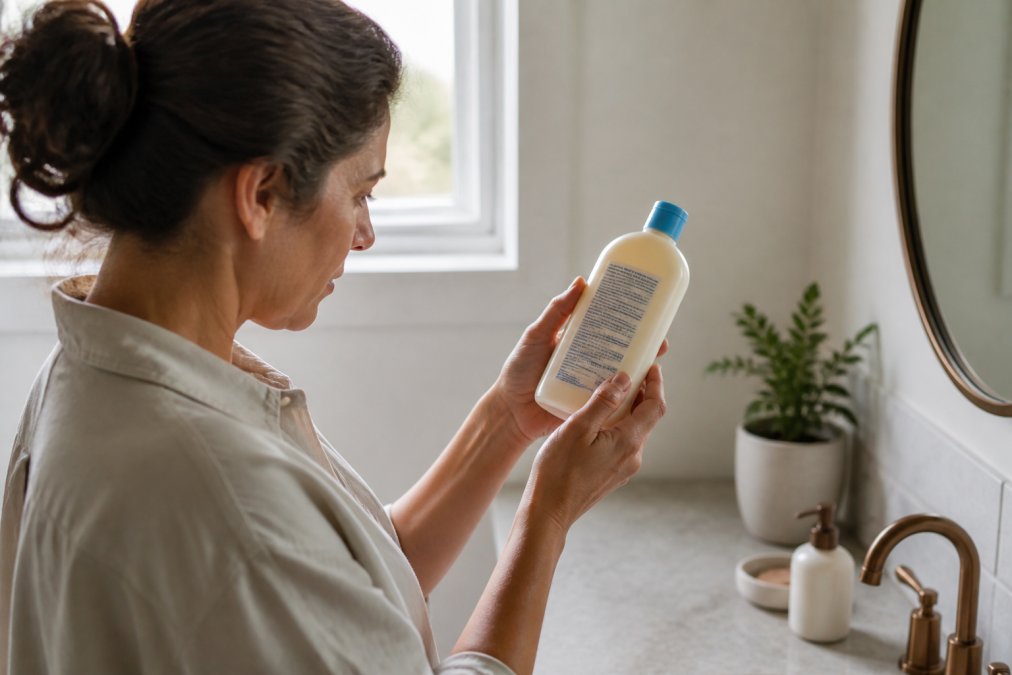
Start at the top of the INCI list. If water is first, that is normal. If a harsh surfactant or fragrance sits in the top five, put it down. Anything after the preservative is present in tiny amounts and rarely worth worrying about.
Ignore the claims on the front. "Dermatologically tested", "gentle", and "pure" carry no fixed legal meaning in the UK. The back label is the only part that tells the truth.
Fragrance-Free Bath Soap for Sensitive Skin
Fragrance-free bath soap for sensitive skin removes the most common trigger before it reaches your child. For a child who has already reacted to a product, this is the first change to make.
True fragrance-free means no added scent at all, not "unscented", which sometimes masks a fragrance with another compound. Check for "parfum", "fragrance", and individual essential oils, all of which can provoke the same reaction.
If you want a scented bath for a child with sensitive skin, keep it occasional rather than daily, and patch-test on the inner arm first. Even naturally derived scents carry sensitiser potential.
Certifications and Standards for Children's Toiletries
In the UK, children's bath products are governed by cosmetics regulations that require a safety assessment and correct labelling. There is no separate "children's" certification, so recognisable marks carry real weight.
The UK Cosmetics Regulation guidance from the Office for Product Safety and Standards sets out the legal requirements every cosmetic sold in the UK must meet, including ingredient restrictions and labelling. The Cosmetics Products Enforcement Regulations give these rules their legal footing.
For ingredient safety data, the Cosmetics Ingredient Database from the European Commission is a useful reference for checking individual substances. None of these replace your own judgement, but they give you a factual baseline beyond the marketing copy.
A Parent's Checklist for Safe Bath Products
A practical checklist turns label-reading into a quick, repeatable habit. Use this on your next shop or online order.
- Ingredient list is short and readable
- No SLS or high-concentration SLES
- No "parfum" or "fragrance" for sensitive skin
- No methylisothiazolinone
- No potent essential oils like tea tree or citrus
- Preservative is a mild option such as sodium benzoate
- Claims on the front match a simple ingredient list
- Patch-tested before full use
Absolute Whifs makes handmade bath products free from harsh chemicals, with a focus on natural ingredients. For parents who want a simpler, more transparent option, our whipped soaps and bath potions are worth a look.
Frequently Asked Questions
What ingredients should I avoid in children's bath products?
Avoid sodium lauryl sulfate (SLS), parabens, phthalates, synthetic fragrances, and formaldehyde-releasing preservatives. These can irritate young skin or trigger allergic reactions. Look for products with short, recognisable ingredient lists and no added perfume. If a label lists 'fragrance' or 'parfum' without specifying the source, it may contain undisclosed chemicals. Always patch-test new products before regular use.
Are natural bath products always safer for toddlers?
Not necessarily. 'Natural' is not a regulated term, so it can appear on products that still contain irritants. Some essential oils, for example, are natural but can cause reactions in young children. The safest approach is to check the full ingredient list and look for recognised certifications rather than relying on marketing claims. Non-toxic bath products for kids should be free from harsh surfactants and synthetic additives, regardless of whether they are labelled natural.
How do I check if a bath product is safe for my child's sensitive skin?
Start by reading the label for known irritants like sulfates, parabens, and synthetic fragrances. Choose fragrance-free bath soap for sensitive skin where possible. Look for products that state they are dermatologically tested or suitable for sensitive skin. Before using a new product, test a small amount on your child's inner arm and wait 24 hours to check for redness or itching. If your child has eczema or allergies, consult a GP or dermatologist.
What are the benefits of fragrance-free bath products for children?
Fragrance-free products reduce the risk of skin irritation and allergic reactions, which are more common in young children because their skin barrier is still developing. They are especially useful for children with eczema, asthma, or known sensitivities. Even products labelled 'unscented' may contain masking fragrances, so check the ingredient list for 'fragrance' or 'parfum'. Choosing fragrance-free options simplifies bath time and lowers the chance of flare-ups.
Do I need to look for specific certifications on children's toiletries?
Yes, certifications can help you identify products that meet safety and quality standards. In the UK, look for certifications that indicate a brand has taken extra steps to verify its formulations. Always cross-check certifications with the ingredient list, as a product can be certified organic but still contain potential irritants.
Can I use adult bath products on my young child?
Adult bath products often contain higher concentrations of fragrances, essential oils, and active ingredients that can be too harsh for a child's thinner skin. It is safer to use products specifically formulated for children, which typically have milder surfactants and fewer allergens. If you are unsure, check with a pharmacist or GP. For occasional use, a plain, fragrance-free emollient bath additive may be suitable, but always follow the product's age guidance.
Choosing safe bath products for young children comes down to reading the back label, not the front, and trusting a short, clear ingredient list over clever wording. Absolute Whifs makes handmade, natural bath products free from harsh chemicals, with concentrated, long-lasting scents that suit the whole family. Get started with Absolute Whifs and turn bath time into a calm, safe ritual you can feel good about.

